The “progenitor Of Modern Highways”, Built 2,200 Years Ago, Has Been Found In China.

The discovery was announced on December 9 following research begun last year by the Institute for the Study and Protection of Cultural Heritage in the city of Yulin in Shaanxi Province in the north-west of the country, reports South China Morning Post.
According to historical chronicles, the Qin Imperial Road was built by order of the first emperor of China, Qin Shi Huang, and took only five years to complete.
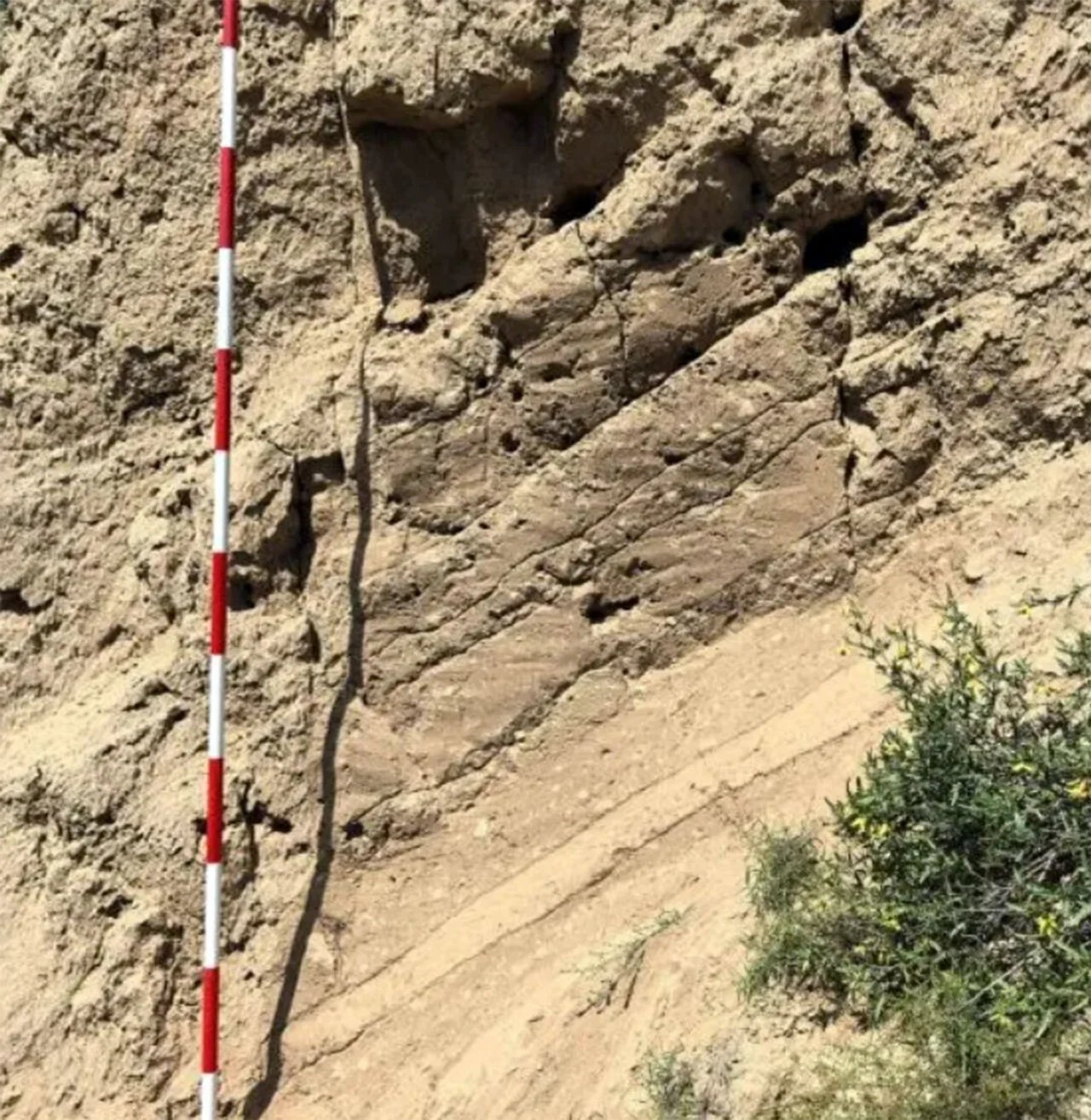
Excavations revealed advanced construction techniques: straight trenches, slope reinforcement with compacted earth, compacted road surfaces and filled valleys. The average width of the road was about 40 meters – by modern standards this is enough for four lanes.
Historical records describe how workers “filled valleys and cut away mountains” to create a direct north-south corridor from Xianyang, the capital of the Qin dynasty (221–207 BC) in what is now Shaanxi province, to Jiuyuan (now the city of Baotou in Inner Mongolia). This made it possible to quickly transfer troops to repel the raids of the Xiongnu nomads.
A small settlement was also discovered nearby, which is believed to have been a postal station that operated during the Qin era and the following Han dynasty (206 BC – 220 AD). Fragments of pottery found there helped confirm its age and purpose.
“The Qin Imperial Road is the second most important defensive project in ancient China after the Great Wall of China,” says China Cultural Heritage News, a publication of the State Administration of Cultural Heritage. It calls the road “the progenitor of the world’s highways.”
The discovery confirms ancient texts and sheds new light on the extent of pre-industrial engineering, revealing that China created one of the world’s first extensive networks of long-distance land communications than 2,000 years ago.
Archaeologists have used satellite technology to identify possible road lines visible in areas where vegetation has been replanted in what was once a desert. Well-preserved remains of the road were found, including nine straight sections of trenches and compacted layers of soil to strengthen the slopes. Numerous traces of trampled surfaces (areas compacted by foot or wheel traffic), as well as compacted road bases and filled valleys, were also found.
The width of the road varied from 40 to 60 meters, the distance from it to the surrounding mountain passes reached from 50 to 90 meters.
During the Qin Dynasty, both the road and the Great Wall played key roles in repelling Xiongnu invasions. The Great Wall provided a strong and extended defensive line, and a reliable transport route was required to effectively move troops and supplies.
Historian Sima Qian wrote in Historical Notes that the construction of the Qin Imperial Road began in 212 BC. e. – in the 35th year of Qin Shi Huang’s reign – and continued until his death.
The project was completed in 207 BC. e., already under his son, Ershi-huangdi. A chronicler who himself traveled along this road documented its starting and ending points and described the process of “filling valleys and cutting mountains” to create the path, as well as the use of huge volumes of compacted earth to level the highway over difficult terrain.
The road was built at the height of imperial power, and when that power waned, it became of an aid to the very nomads it was built against—providing an easy route into the heartland for conquerors.
Over time, the highway was destroyed or hidden by natural factors and human influence, and its exact route was lost. In 1974, Chinese archaeologists discovered one of its sections, and since then the search for the remaining part of the road has been ongoing. In 2009, a section of the Qin Imperial Road in Fu County, Shaanxi Province, was recognized as one of the ten greatest archaeological discoveries in China.
Disclaimer: This news article has been republished exactly as it appeared on its original source, without any modification.
We do not take any responsibility for its content, which remains solely the responsibility of the original publisher.
Disclaimer: This news article has been republished exactly as it appeared on its original source, without any modification.
We do not take any responsibility for its content, which remains solely the responsibility of the original publisher.
Author: uaetodaynews
Published on: 2025-12-22 16:27:00
Source: uaetodaynews.com